 | |||
| A View of St. Peter's taken by myself |
 |
| 35mm Film Camera |
 |
| 35 mm Film |
Shutter Speed
Shutter Speed is used to determine the amount of light exposed to the sensor(in a digital camera) or the film (in a film camera). When the shutter speed is slowed down, morelight is allowed to enter, thereby creating a more blurred effect. Slowing the speed down is also sometimes usedfor capturing fast or flashing light. A sharperimage can be obtained when the shutter speed is set at a faster rate.

Below is one of my favorite photos and an example of slow shutter speed.
 |
| "It's rainin fire" taken by Hayden Grant |
Depth of Field
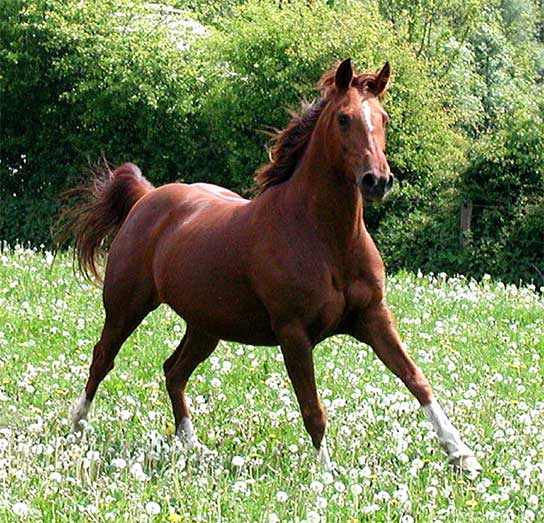
The depth of field in photography refers to the distance and focus of objects in a photograph. Depending on how the camera settings are placed, a photograph can have very little or a great deal of depth. The two images below are examples. The first one of the horse shows a lack of depth of field, while the second photo displays much more.

 |
| A photo I took while in Ravenna, Italy |
Bruno Barbey
"Bruno Barbey is a Frenchman born in Morocco. He studied photography and graphic arts at the École des Arts et Métiers in Vevey, Switzerland. Between 1961 and 1964 he photographed the Italians, treating them as protagonists of a small 'theatrical world', with the aim of capturing the spirit of a nation."
 |
| Rome, Italy, 1964. |
 |
| Poland, 1967 |
 |
| Korea, 2008 |
 |
| Italy, 1966 |
 |
| Turkey, 2009 |
 |
| China, 2010 |
 |
| Photo taken by myself in Fargo, ND |
ISO Settings
ISO (in traditional photography) is the sensitivity of the film to light. When the camera is to a lower number (eg. 100), the film then has a lower sensitivity and has a finer grain.
Quoted from Digital-Photography-Film.com,
"In Digital Photography ISO measures the sensitivity of the image sensor. The same principles apply as in film photography – the lower the number the less sensitive your camera is to light and the finer the grain. Higher ISO settings are generally used in darker situations to get faster shutter speeds (for example an indoor sports event when you want to freeze the action in lower light) – however the cost is noisier shots."

Kalvin Temperature
Kalvin temperature, or color temperature is the hue of a light bulb that is used in photography.
"Color temperatures over 5,000K are called cool colors (blueish white), while lower color temperatures (2,700–3,000 K) are called warm colors (yellowish white through red)"
 |
| Artistic Photo taken by Viata Prin Ochii Mei |
 |
| 35mm camera wide-angle lens natural lighting (cast-over daylight) from outdoors, no flash Low ISO Photographer is standing camera (on tripod?) pointed upwards. approx. 5.6 diaphragm |
 |
| 35mm camera Normal lens Natural lighting: Cloudy, overcast day with no flash. Large depth of field Low ISO Somewhat under exposed |
 |
| Natural lighting (sunny) from outdoors, no flash. 35 mm camera normal lens Low ISO Diaphragm 11 Photographer standing with camera pointed downwards. |
 |
| 35 mm camera? Normal lens Artificial lighting, no flash over exposed Low ISO Photographer is slightly squatting |
 |
| 35mm camera? Natural lighting: Bright, sunny day with no flash. ISO is medium to high Normal lens Photographer holding camera lens, slightly downwards Medium to large depth of field |
Midterm
Taressa Bartholomew 3/11/13
1.Which f-stop allows the most light in?
F1.8
2.Which allows the least?
F22
3. Which will givethe most depth of field?
F1.8
4. What does depth-of-field mean?
Depthof field refers to the sharpness (or lack thereof) of the background in aphoto. A photo with a large depth of field will have a blurry background withthe subject being in focus, but a small depth of field means the backgroundwill be as sharp as the subject.
5. Where is theaperture diaphragm located?
Nearthe lens of the camera.
6. How is aperturemeasured?
Apertureis the amount of light let in to the film. It is measured in numbers ranginganywhere from f1.8 (more light) to f22 (less light). These numbers can varydepending on the camera.
7. Which f-stop allowshalf the amount of light as f5.6?
F11-F16
8. Which allows twicethe light as f5.6?
F2.8
9. What does focallength refer to?
FocalLength refers to the distance from the object to the camera lens.
10. Besides aperture,what is another factor that affects depth of field?
Shutterspeed can also affect the depth of field.
11. Where is the depthof field scale located (on a traditional slr)?
Inside the lens of the camera.
12. What is the shutter andwhat does it control?
The shutter controls the amount of light let intothe camera. It acts just like theshutter on a window.
13. How is shutter speedmeasured?
Shutter speed is measured using seconds. The longerthe shutter is left open (1 sec, 1/30 sec, 1/500, etc.) the more or lessexposed the film is.
14. Where is the shutterlocated?
The shutter is located inside the camera, rightbehind the lens.
15. What kind of shutterspeed is needed in low light conditions?
A slow shutter speed, so as to allow more light ontothe film.
16.What does “B” refer to?
B refers to “Bulb”, which is a setting that allowsthe photographer to keep the shutter open as long as the capture button isbeing pressed.
17. What is the safestslow shutter speed without a tripod?
1/30
18. Which ss allowstwice as much light as “60”(1/60)?
1/30
19. Which allows half asmuch light as “60”?
1/125
20. On a given day, yourcamera gives you a correct reading of f4 at250. What other configurations would give you the same amountof light and a greater depth of field? (list four ways).
f2.8 at 1/500, f5.6 at 1/125, f8 at 1/60, and f11 at1/30
21. Which would give youthe same amount (as above) of light and allow you to create a blurredpicture of a speeding car?
f11 at 1/30
22. Which shutterspeed would give you the same amount of light (as above, question 20)at f2.8?
f2.8 at 1/500
23. On a shadowyarea with a bright sky, how would you ensure a correct exposure of asubject in shadow?
I would say f11 at 1/250 would be the best setting.
24.Which is a better setting, f4 at 1/60, or f 16 at 1/4 ? Saywhy.
F4 at 1/60. These settings are better because theshutter speed is a tad faster and more light is allowed in, thus making iteasier to create a sharp image.
25. What does ISO referto?
ISO is the measurement of a film’s sensitivity tolight.
26. What is a fast filmand when should it be used?
Fast film is a film with a high sensitivity to light(high ISO) and is used to produce a more grainy photo.
27. What is the majorproblem with fast films?
The ISO is very high, which is a noisy photo, aproblem if the photographer wants a photo with a low ISO.
28. What are the threechemical steps used in printing a photograph?
Thefirst step is to place the photo in the developer for 2 minutes. Rinse in water for 30 seconds, and lastly 2minutes in the fixer.
29.List two (2 p) ways exposure is controlled in the darkroom.
Exposureis controlled two ways. The first is the amount of time the light is setat to burn the paper. The second is the size of the diaphragm (strength oflight).
30. How is contrastmanipulated in the darkroom?
Whendeveloping in the darkroom, contrast is affected by the length of time thepaper is burned and by the filter placed in the enlarger.
FINAL PRESENTATION
Tara Bartholomew
Ugo Mulas
For my photographer, I choose Ugo Mulas. Ugo was born on August 28, 1928. He first began studying law in 1948, but found he was unhappy doing this. So he left to go to Brera Fine Arts Academy where he discovered his love for photography. His work soon became popular, and he traveled many places throughout Italy including Milan, Florence, Venice and other various cities. Ugo Mulas is best known for his work of portraits and street photography. Sadly, after battling an illness for several months, he died in Milan on March 2, 1973.

2/3 Proportion
Normal lens
Small to medium Diaphram
Taken by hand?
Natural lighting: Sunny day
Low ISO

2/2 Proportion
Normal Lens
Medium Diaphragm
Taken by hand or tripod
Natural light
Medium ISO

2/3 Proportion
Wide-angle
Medium Diaphragm
Taken by hand
Camera held at a downward angle
Natural light
Medium ISO

2/3
Normal lens
Small Diaphragm
Slow to medium Shutter speed
Natural and Artificial
High ISO
Technical Aspect
Darkroom Printing
Enlarger: To print in the darkroom, every photographer uses an Enlarger. In order to achieve a desired look for a photo, many things have to changed or measured.
Zoom: This is to change the size of the photo, whether the person desires a small or large photo.
Aperture: This changes the "harshness" of the light. Many times the aperture is put 2-4 stops in from the most open setting.
Filter: A filter is often placed in the Enlarger. The lower the number of the filter, the less contrast and vice versa.
Focumeter: Used to make sure that the photo is in focus.
Time: Changed to make a photo darker or lighter.
Test-Strip: A small piece of paper used to test the various settings before burning the final product.
Once the photo has been burned, the paper is placed in a mixture of Developer for 2 minutes.
After that, it is rinsed off in water for 30 seconds.
Then the paper is placed in a mixture much like that of Developer, but instead is Fixer. This is allowed to soak for 2 minutes.
Finally, the paper is again soaked in water for 2 minutes and then is hung and allowed to completely dry.

No comments:
Post a Comment